
Arizona’s extreme climate conditions make it the perfect testing ground for advanced irrigation technology. With summer temperatures regularly exceeding 115°F, unpredictable monsoon patterns, and increasing water restrictions from Colorado River cuts, landscape professionals need more than basic irrigation systems—they need intelligent technology that can adapt to desert conditions in real-time.
Smart irrigation technology represents a fundamental shift from static scheduling to dynamic, data-driven water management. In Arizona’s challenging environment, where traditional irrigation methods waste 40-60% more water during shoulder seasons while potentially under-watering during extreme heat, these advanced systems aren’t just beneficial—they’re essential for sustainable landscape management.
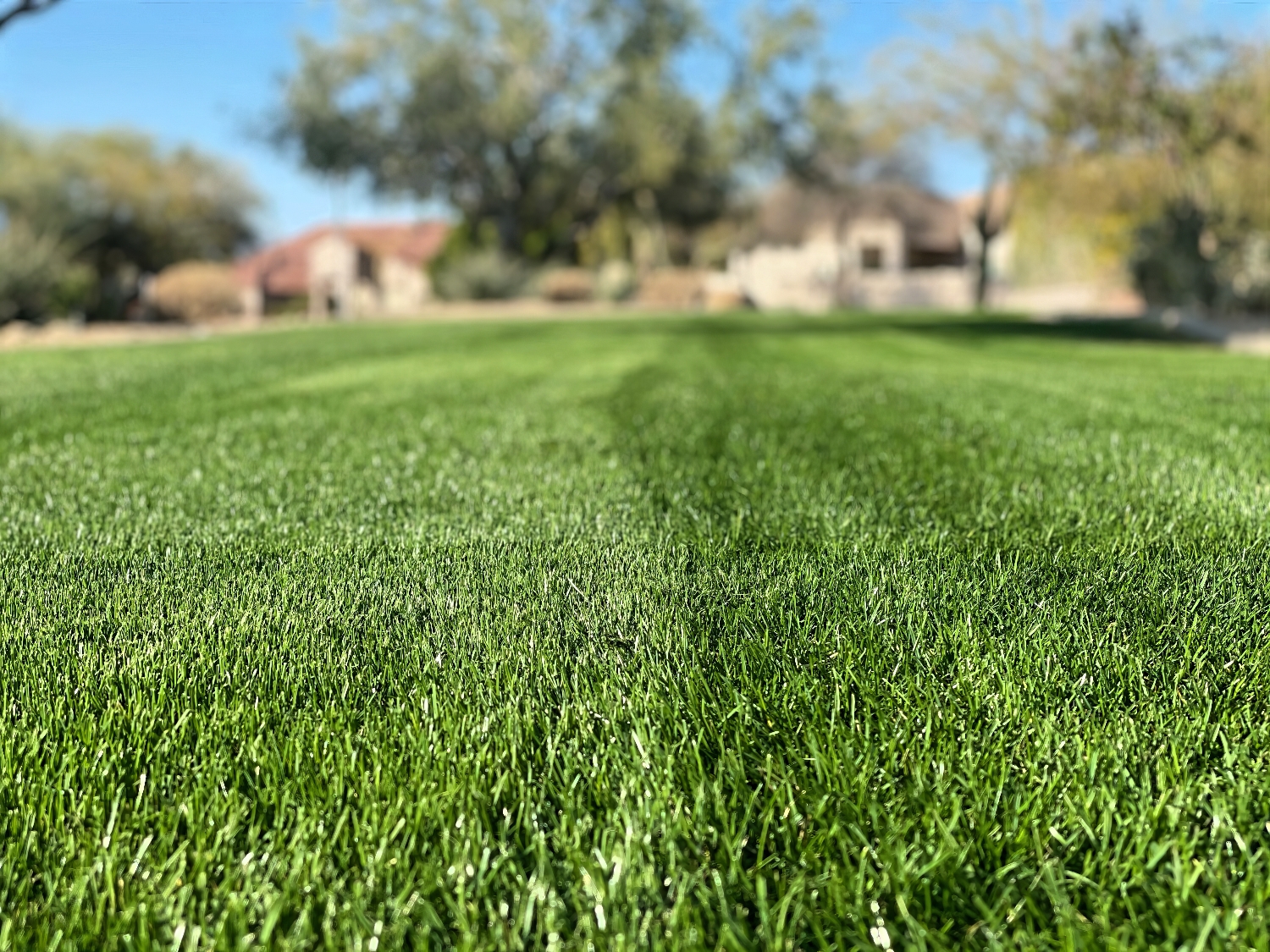
Traditional irrigation scheduling in Arizona represents a particularly costly mistake given the state’s extreme climate variability. The conventional approach—programming static schedules during moderate weather and leaving them unchanged—fails catastrophically when applied to Arizona’s dramatic seasonal swings and unpredictable monsoon patterns.
Consider Arizona’s irrigation challenges: summer temperatures exceeding 115°F drive evapotranspiration rates to extreme levels, while winter lows can drop below freezing. The monsoon season (July through September) can deliver months’ worth of rainfall in a single afternoon, followed by weeks of bone-dry conditions. Dust storms coat equipment and clog nozzles. Caliche hardpan prevents proper water infiltration, creating runoff even during appropriate watering cycles.
Static schedules cannot adapt to these variables. A system programmed for moderate spring conditions will dramatically under-water during peak summer heat, stressing expensive desert-adapted plants and compromising landscapes that cost thousands of dollars to establish. Conversely, maintaining summer schedules during cooler months wastes precious water resources and can actually harm desert plants adapted to dry conditions.
The financial implications in Arizona are particularly severe. With municipal water rates among the highest in the nation—often exceeding $8-12 per thousand gallons during peak summer months—irrigation inefficiencies directly impact bottom lines. Properties using traditional scheduling methods typically over-irrigate by 40-60% during Arizona’s shoulder seasons, while potentially under-irrigating during extreme heat events. For a commercial property spending $30,000 annually on irrigation (typical for larger Arizona properties), this inefficiency translates to $12,000-$18,000 in unnecessary water costs annually.
How Smart Irrigation Technology Works in Desert Environments
Smart irrigation technology transforms traditional watering systems into intelligent, adaptive networks that respond to real-time conditions. These systems integrate multiple data sources—weather stations, soil sensors, plant databases, and historical climate patterns—to calculate precise irrigation schedules that automatically adjust to changing environmental conditions.
The core technology operates on advanced evapotranspiration (ET) calculations, measuring the combined water loss from soil evaporation and plant transpiration. In Arizona’s extreme climate, where ET rates can reach 0.5 inches per day during peak summer heat, this precision becomes critical. Smart controllers access specialized desert weather stations that understand the difference between dry heat (which exponentially increases water needs) and monsoon humidity (which can temporarily reduce requirements).
Advanced systems today go beyond basic weather adjustment to incorporate Arizona-specific variables, including monsoon forecasting, dust storm predictions, and desert plant phenology. These controllers differentiate between desert-native species (requiring minimal irrigation), desert-adapted plants (needing strategic deep watering), and oasis zones around buildings where higher water-use plants create cooling microclimates.
The technology automatically prevents irrigation during Arizona’s unpredictable monsoon storms, avoiding both water waste and potential plant damage from over-saturation. When extreme heat events occur—increasingly common as climate patterns shift—the system extends watering cycles and schedules additional pre-dawn applications when wind speeds are lowest and infiltration rates highest.
Soil moisture monitoring becomes particularly sophisticated in Arizona, where caliche hardpan layers create complex underground conditions. Advanced sensors detect when water has successfully penetrated these barrier layers versus when it’s simply pooling on the surface, preventing both under-watering and runoff that violates municipal water waste ordinances.
The Strategic Value of Smart Irrigation Platform Standardization
For landscape professionals managing multiple properties across Arizona’s diverse microclimates, standardizing on a smart irrigation platform offers transformative operational advantages. When different properties use different irrigation systems—each with unique interfaces, programming methods, and data formats—technicians must maintain expertise across multiple platforms while dealing with Arizona’s challenging service conditions.
Smart irrigation platform standardization eliminates these inefficiencies while providing advanced capabilities that traditional systems cannot match. Unified smart technology creates consistency across all managed properties, enabling technicians to become highly proficient with intelligent systems that automatically adapt to desert conditions. Centralized monitoring capabilities enable managers to oversee irrigation performance across entire portfolios from air-conditioned offices, particularly valuable during Arizona’s extreme summer months when outdoor work becomes dangerous.
The technology’s data aggregation capabilities transform irrigation from a maintenance expense into a strategic advantage. When all properties use the same smart platform, managers can identify which desert plant combinations perform best, benchmark water efficiency across different soil types, and demonstrate measurable savings to cost-conscious clients facing rising water rates.
During Arizona’s monsoon season, standardized smart irrigation technology provides coordinated responses across all managed properties. When weather stations detect approaching storms, all systems can simultaneously adjust schedules, preventing the widespread over-watering that often occurs when properties using basic timers cannot respond to rapidly changing conditions.
Platform standardization also enables sophisticated water budgeting that accounts for Arizona’s dramatic seasonal variations. Smart systems can allocate water resources across properties based on real-time needs, shifting irrigation intensity between locations as microclimatic conditions change throughout the desert landscape.
Implementation Best Practices for Arizona Conditions
Successful smart irrigation implementation in Arizona requires specialized knowledge of desert conditions and their impact on irrigation infrastructure. Site assessment must include evaluation of caliche depth and composition, as hardpan layers significantly affect water infiltration rates and may require soil amendment or specialized emitter selection.
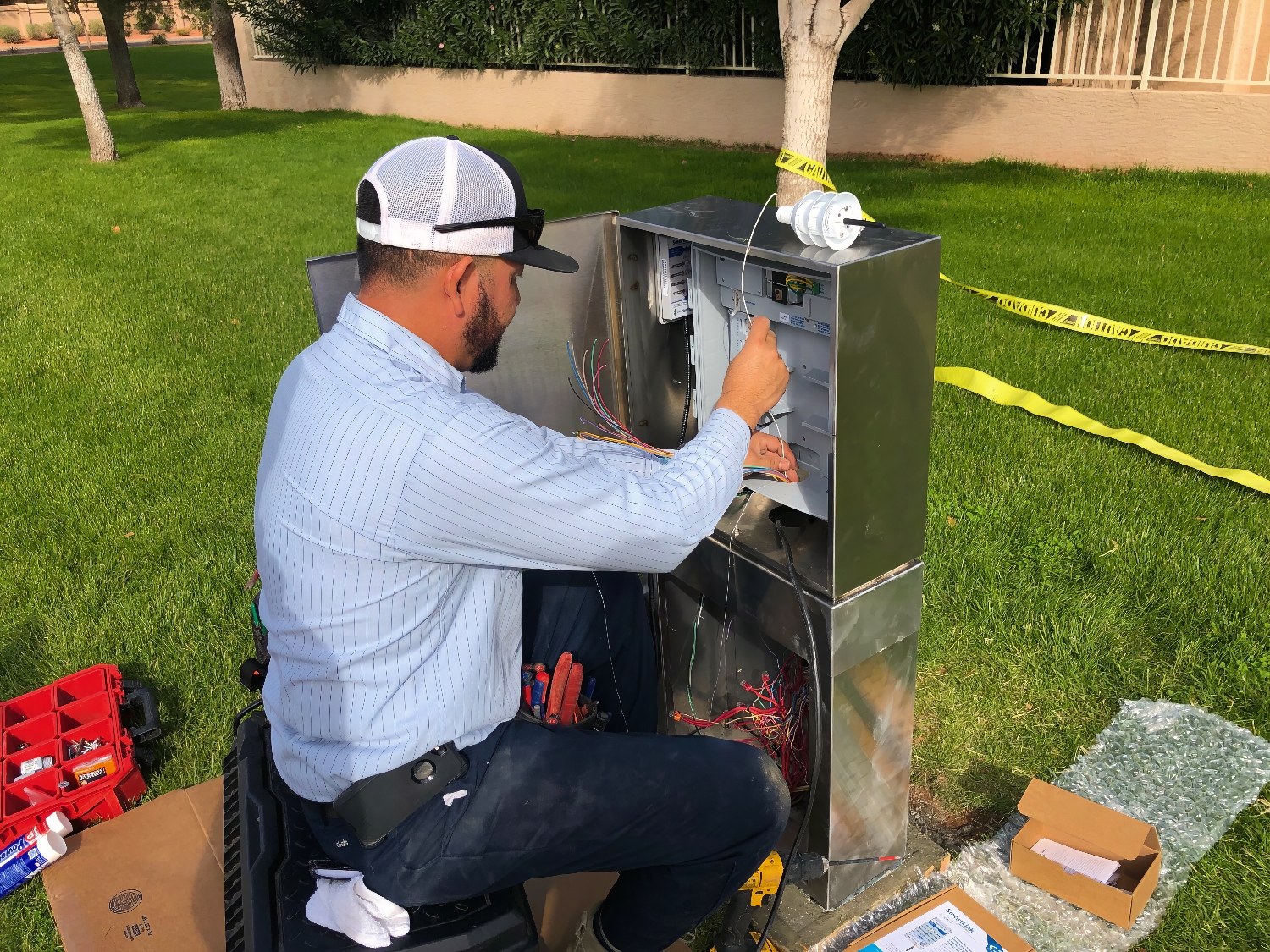
Arizona’s extreme UV exposure and temperature fluctuations demand controllers with industrial-grade enclosures rated for desert conditions. Control panels must withstand temperatures exceeding 130°F in direct sunlight while maintaining programming integrity. Communication systems should account for monsoon-related power outages and dust storms that can interfere with wireless signals.
Soil analysis takes on particular importance in Arizona, where caliche layers, desert pavements, and highly alkaline conditions affect both water penetration and plant root development. Professional soil testing should measure not just infiltration rates, but also pH levels, salt content, and hardpan depth. Many Arizona properties benefit from soil amendments or specialized drip systems designed to navigate around caliche barriers.
Plant material inventory must reflect Arizona’s unique irrigation zones. Desert-native plants like palo verde, desert willow, and various cacti may require no supplemental irrigation once established, while desert-adapted plants like Texas red oak or Argentine mesquite benefit from strategic deep watering during extreme heat periods. Transition zones where desert plants meet higher water-use landscaping require particularly careful programming to avoid over-watering drought-tolerant species.
Monsoon preparation represents a critical implementation consideration unique to Arizona. Controllers must integrate reliable monsoon forecasting services and include rapid shut-off capabilities when soil moisture sensors detect saturation. Systems should also include provisions for post-monsoon drainage assessment, as flash flooding can damage emitters and redistribute mulch or decorative rock.
Water source evaluation in Arizona must account for municipal restrictions, peak-use pricing structures, and potential supply interruptions during extreme demand periods. Many Arizona properties benefit from rainwater harvesting integration, particularly for monsoon season collection that can offset irrigation needs during fall months.
Proven ROI from Smart Irrigation Technology in Arizona
Smart irrigation technology delivers exceptional returns in Arizona’s extreme climate, where the technology’s adaptive capabilities provide benefits far beyond typical water savings. Advanced systems like Weathermatic often achieve 25-45% water consumption reduction compared to traditional scheduling—significantly higher than national averages due to Arizona’s dramatic seasonal variations and the technology’s ability to prevent monsoon-related over-watering.
The technology’s real-time adaptation capabilities prove particularly valuable during Arizona’s temperature extremes. When heat events push afternoon temperatures above 115°F, smart systems automatically adjust schedules to protect valuable desert landscaping that can cost $5,000+ per mature tree to replace. Traditional irrigation systems cannot respond to these conditions, often leading to heat stress damage that permanently impacts plant health.
Labor efficiency improvements from smart irrigation technology become crucial during Arizona’s summer months when outdoor maintenance work must be completed during pre-dawn hours. Remote monitoring and automated adjustments reduce irrigation-related service calls by 30-40% during peak heat periods, improving both technician safety and operational efficiency. The technology enables landscape professionals to manage complex irrigation schedules from climate-controlled offices rather than making dangerous site visits during extreme weather.
Smart irrigation technology also provides sophisticated peak-use rate management, automatically shifting water usage to off-peak hours when Arizona utility rates can be 50-70% lower. During summer months when water rates can exceed $12 per thousand gallons, this optimization delivers immediate cost savings while reducing strain on municipal water systems during peak demand periods.
Environmental compliance represents another significant benefit, as smart irrigation technology helps properties meet increasingly strict Arizona water use regulations. The technology’s detailed reporting capabilities provide documentation needed for water audits and municipal rebate programs, with some Arizona utilities offering up to $200 per controller for qualified smart irrigation installations.
Most importantly, smart irrigation technology future-proofs operations against Arizona’s evolving water challenges. As Colorado River allocations decline and groundwater restrictions tighten, properties equipped with advanced irrigation technology will be positioned to maintain viable landscapes while meeting increasingly stringent conservation requirements.
The Future of Smart Irrigation Technology in Arizona
Smart irrigation technology is rapidly evolving to meet Arizona’s increasingly complex water management challenges. As Colorado River cuts deepen and urban growth continues in desert regions, advanced irrigation systems are transitioning from competitive advantages to operational necessities. The Arizona Department of Water Resources continues implementing stricter conservation requirements, while municipalities expand tiered pricing structures that heavily penalize inefficient water use.
Next-generation smart irrigation technology promises even greater capabilities for Arizona applications. Integration with satellite-based plant stress monitoring, AI-driven systems that learn from historical monsoon patterns, and predictive analytics that anticipate extreme heat events represents the cutting edge of desert water management. Some systems now incorporate dust storm forecasting to protect equipment and optimize maintenance schedules around Arizona’s challenging weather conditions.
For Arizona landscape professionals, expertise in smart irrigation technology provides immediate competitive advantages. Demonstrated water savings become powerful sales tools in a market increasingly focused on sustainability and cost control. The technology’s safety benefits during extreme weather periods improve both client satisfaction and employee welfare. Most importantly, proficiency in advanced water management positions companies for success as regulatory requirements become more stringent.
Standardizing on proven smart irrigation technology systems accelerates these benefits while reducing implementation complexity. Many technologically advanced systems have developed Arizona-specific calibrations that account for caliche soil conditions, monsoon variability, and the extreme temperature ranges that define desert irrigation management. Their platform provides the consistency and reliability needed to manage complex irrigation requirements across Arizona’s diverse microclimates, from the Sonoran Desert around Phoenix to the high desert conditions in Flagstaff and Sedona.
The path forward requires embracing smart irrigation technology explicitly designed for desert conditions and extreme climate variability. Water supply constraints will only intensify as the Colorado River Compact faces renegotiation and groundwater depletion accelerates in Arizona’s Active Management Areas. Companies that master intelligent irrigation technology now will be positioned to thrive as water becomes an increasingly precious resource.
For landscape professionals ready to implement smart irrigation technology, the opportunities for operational improvement and business differentiation are immediate and substantial. In Arizona’s challenging environment, intelligent water management isn’t just good business—it’s the foundation for long-term success in an increasingly water-constrained market.
“ProQual is always looking out for the best interests of the community I manage. Thank you for that!”
Lynda
Community Manager